The late 19th century was a period of significant cultural exchange between Britain and India, largely driven by the British Empire's influence over the Indian subcontinent. This era, often referred to as the British Raj, saw the blending of British and Indian artistic traditions, resulting in unique artifacts such as the Anglo-Indian trunk from 1880.
Anglo-Indian trunks from the 19th century were typically crafted using high-quality materials, reflecting the opulence and craftsmanship of the time. Common materials included:
Teak Wood: Known for its durability and resistance to termites, teak was a preferred choice for crafting sturdy trunks.
Brass or Iron Fittings: These metals were used for hinges, locks, and decorative elements, providing both functionality and aesthetic appeal.
DIMENSIONS
50.5ʺW × 27ʺD × 28ʺH
The late 19th century was a period of significant cultural exchange between Britain and India, largely driven by the British Empire's influence over the Indian subcontinent. This era, often referred to as the British Raj, saw the blending of British and Indian artistic traditions, resulting in unique artifacts such as the Anglo-Indian trunk from 1880.
Anglo-Indian trunks from the 19th century were typically crafted using high-quality materials, reflecting the opulence and craftsmanship of the time. Common materials included:
Teak Wood: Known for its durability and resistance to termites, teak was a preferred choice for crafting sturdy trunks.
Brass or Iron Fittings: These metals were used for hinges, locks, and decorative elements, providing both functionality and aesthetic appeal.
DIMENSIONS
50.5ʺW × 27ʺD × 28ʺH
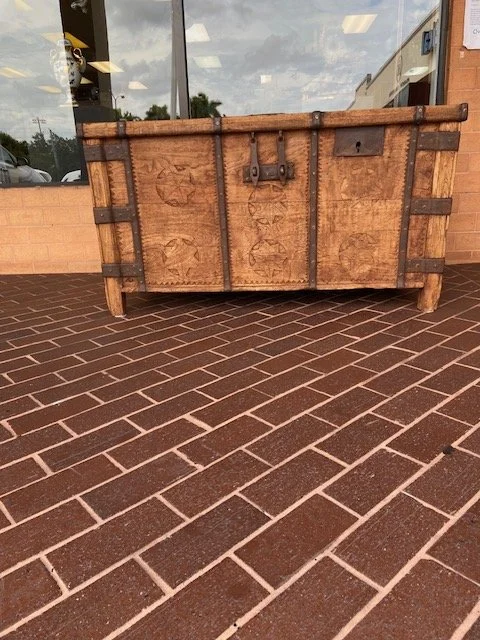 Image 1 of 7
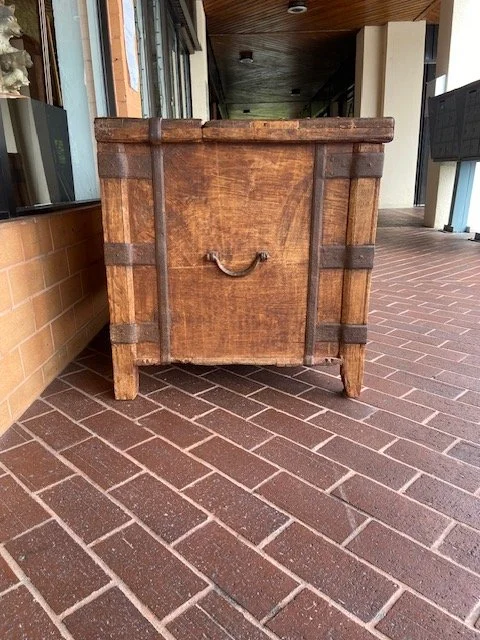 Image 2 of 7
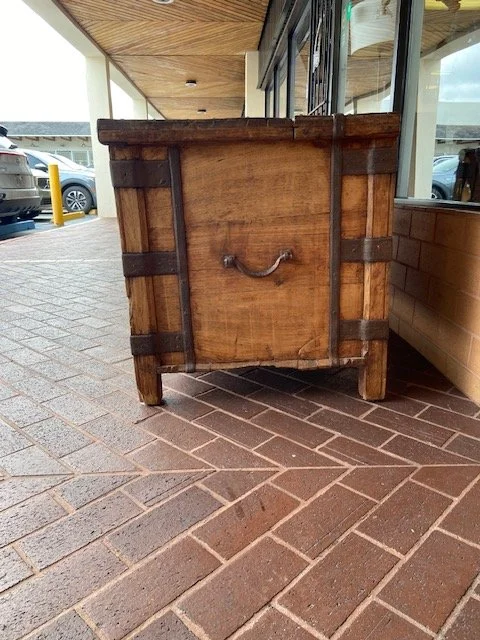 Image 3 of 7
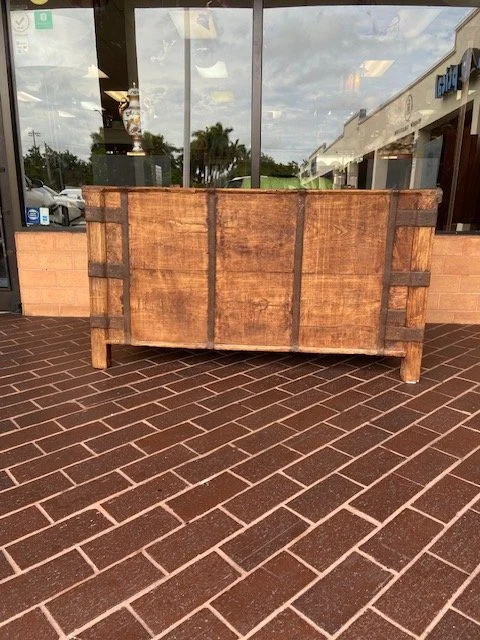 Image 4 of 7
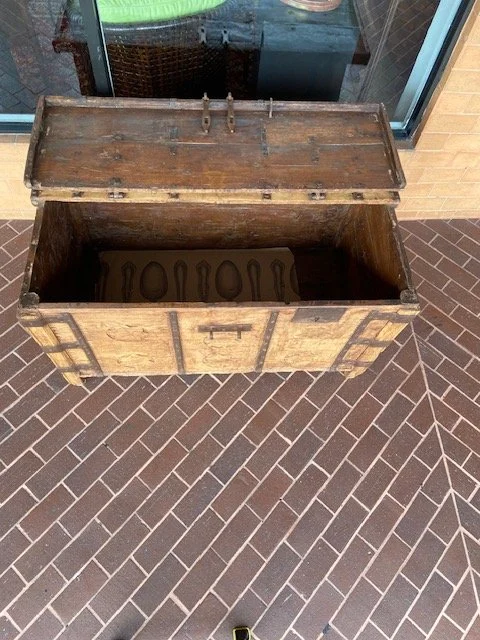 Image 5 of 7
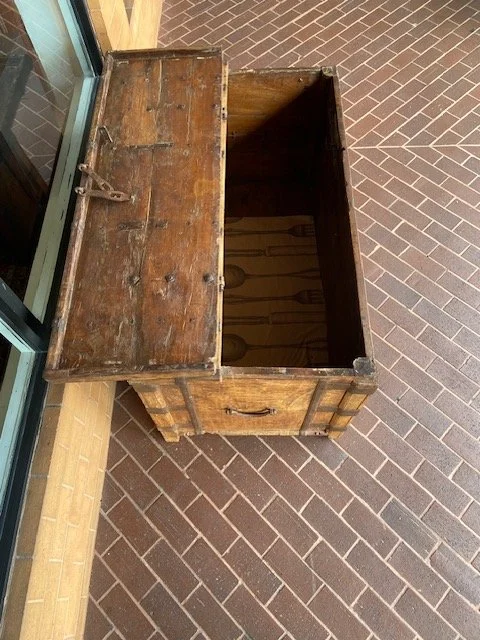 Image 6 of 7
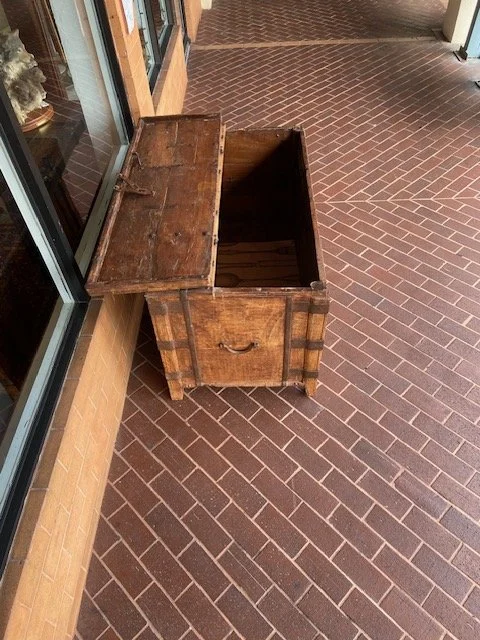 Image 7 of 7